
A practical playbook for Hotel Owners, General Managers, and HR Directors who want to turn team development into a strategic advantage
Hotel service excellence starts long before a guest checks in, it begins the moment a new team member walks through the staff entrance for the first time. Hotel staff training is the single most controllable variable between a forgettable stay and a five-star review, yet in an industry where the pressure to fill shifts often outweighs the time to develop people, it’s frequently reduced to a rushed onboarding checklist.
According to U.S. Bureau of Labor Statistics data, the leisure and hospitality sector averaged 5.8% monthly separations in mid-2024, the highest rate across all industries, meaning most hotels are rebuilding their teams faster than they can develop them.
The hotels breaking this cycle treat training as a continuous operational strategy, not a one-time event. This guide gives Hotel Owners, General Managers, and HR Directors a practical framework to build that same advantage.
What is hotel staff training?
Hotel staff training is a continuous strategic process of educating hospitality employees on the operational, technical, and interpersonal skills required to deliver exceptional guest experiences and optimize property performance.
Unlike traditional onboarding, where a new hire shadows a colleague for a few days and is handed a manual, modern hotel staff training is not a one-time event. It is an ongoing development cycle designed to adapt to evolving guest expectations, new technology, and shifting operational demands.
A front desk agent hired today needs to master a PMS, navigate a guest complaint with emotional intelligence, and identify a room upgrade opportunity in the same conversation. That combination of skills doesn’t come from a single induction session.
The distinction matters because hotels that treat training as a checkbox, something that happens once and is filed away, consistently underperform against those that build a genuine learning culture. The latter don’t just onboard people; they develop them continuously, from their first shift all the way through to senior roles.
The business case: why staff training is essential
In the current hospitality landscape, the “labor crisis” has evolved. We are no longer just struggling to find bodies; we are struggling to retain talent. Nowadays, staff training has shifted from a line-item expense to a high-yield capital investment. When you train a team member, you are teaching them things like how to check guests in as well as increasing the valuation of your human capital.
1. The retention revolution: training as “stay insurance”
The data is staggering: 94% of employees report they would stay at a company longer if it invested in their career growth. In an industry where turnover costs can exceed $5,000 per entry-level employee (factoring in recruitment, background checks, and lost productivity), a robust training program pays for itself by preventing just three or four “quits” per year.
By providing a clear roadmap, from Junior Concierge to Front Office Manager, you transform a “job” into a “career.” This psychological shift is the most effective barrier against competitors poaching your best talent.
2. Operational efficiency: eradicating “dead time”
Mastery of Standard Operating Procedures (SOPs) and your Property Management System (PMS) does more than just prevent errors; it creates “flow.”:
- Mastery of Tools: When a staff member is an expert in your property management system, they stop staring at the screen and start looking at the guest.
- The Error Chain: Most guest complaints stem from small, avoidable technical errors. Proper training breaks that chain, ensuring a 5-star experience is the standard, not a lucky accident.
3. Revenue architecture: from order-takers to profit-makers
Your team is the frontline of your sales strategy. Without training, a server is just an “order taker.” With it, they become a revenue architect:
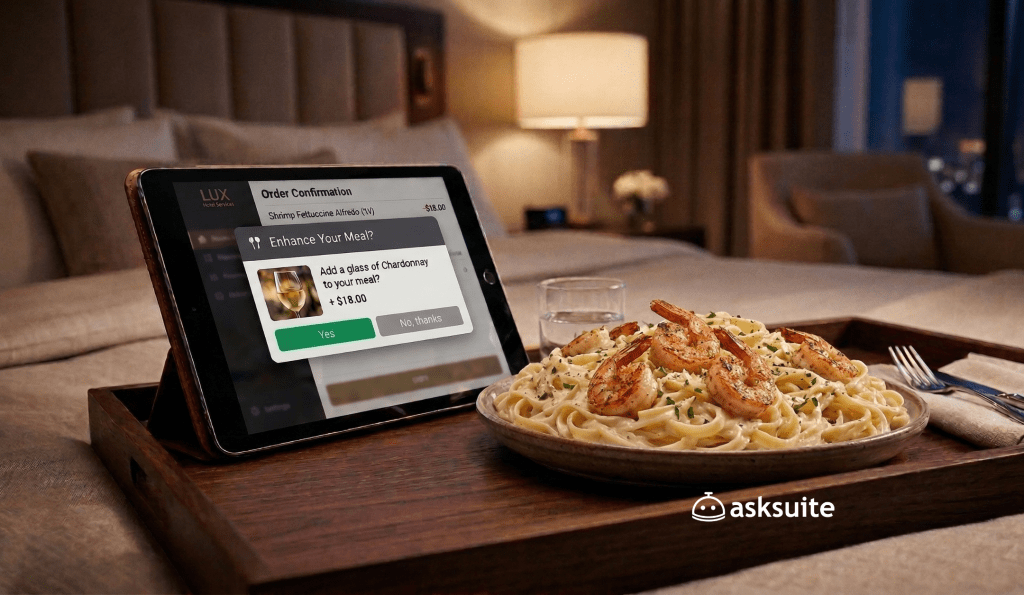
- The art of the upsell: Training empowers staff to identify the “moment of truth”, that perfect-timing sweet spot, when a guest is open to a room upgrade or a premium wine pairing.
- Increased RevPOR: When your team knows how to sell value rather than just features, your revenue per occupied room climbs naturally, without the need for aggressive marketing expenses.
4. The CX halo effect: NPS and online sentiment
In the age of instant online feedback, consistency is your brand’s greatest asset. Guests want more than great service, they want predictable service:
- Brand integrity: Training ensures that the “luxury experience” you promised on your website is actually delivered at 3:00 AM by the night auditor.
- The review cycle: Consistent service leads to better reviews, which in turn justifies a higher nightly rate. It’s a virtuous cycle that starts and ends with how well your team is prepared.
Core areas of professional hospitality training
To build a high-performing team, your curriculum must balance departmental silos with interdisciplinary excellence. Servers must know the details of the menu and understand how their timing affects the Front Desk’s ability to manage a late-night check-in rush.
1. Soft skills (the human element)
Soft skills are the “software” that runs your hotel’s “hardware.” In an era of increasing automation, the human touch is your premium product:
- Empathetic communication & the HEART model: High-stress situations require a scripted yet flexible emotional response. We train staff to use the HEART model (Hear, Empathize, Apologize, Respond, Thank) not as a robotic checklist, but as a way to de-escalate tension. When a guest is upset about a noisy room, an empathetic response can turn a potential 1-star review into a loyal, returning customer.
- The power of autonomy (problem-solving): A “high-performance” team is one that doesn’t need to ask permission to be excellent. Training should focus on empowering staff to fix issues, like a complimentary drink for a long wait, without needing a supervisor’s sign-off. This speed of resolution is what defines a luxury experience.
2. Operational knowledge (the technical core)
This is the “how-to” of your property. If soft skills are the heart, operational knowledge is the spine:
- System proficiency (PMS & POS): Technical mastery of your PMS and Point of Sale (POS) is non-negotiable. Friction during the check-in process or a billing error at checkout are the two most common “guest killers.” Training here must be hands-on and repetitive until the technology becomes invisible to the staff member, allowing them to focus entirely on the person standing in front of them.
- The “Invisible” SOPs: Standard Operating Procedures (SOPs) are the secret to consistency. From how a bed is turned down to how a phone is answered, these small details create a sense of safety and high standards for the guest. In 2026, we go beyond defining the SOP by focusing on why it exists. When a housekeeper understands that a perfectly placed robe is something that tells the guests “welcome home”, the quality of work rises naturally.
3. Revenue generation: the art of the upsell
Many hospitality workers feel uncomfortable “selling.” Training must reframe upselling as an act of service, not a sales pitch.
- Identifying the “Moment of Truth”: Your front-desk and F&B staff are your most valuable sales agents. Effective training teaches them to listen for cues. If a guest mentions it’s their anniversary, that is a “moment of truth” to offer a suite upgrade or a bottle of champagne.
- Driving RevPOR through strategic suggestions: By mastering the art of the suggestion, from a premium wine pairing to a late checkout, your team directly impacts Revenue Per Occupied Room (RevPOR). Rather than practicing aggressive sales tactics, staff learn to harmonize a guest’s unspoken desires with the hotel’s premium offerings. This approach transforms a simple transaction into a personalized upgrade that enhances the overall stay.
Modern training techniques for high-performance teams
The era of the three-hour orientation manual has ended. Today’s workforce excels when information is delivered in a format that encourages immediate application.
The rise of microlearning
Microlearning delivers five-to-ten-minute “burst” lessons via mobile applications. This allows staff to complete critical modules during natural lulls in the shift,such as a quiet period at the front desk or between lunch and dinner service. By breaking complex SOPs into bite-sized segments, retention soars because the cognitive load remains manageable.
Gamification and friendly competition
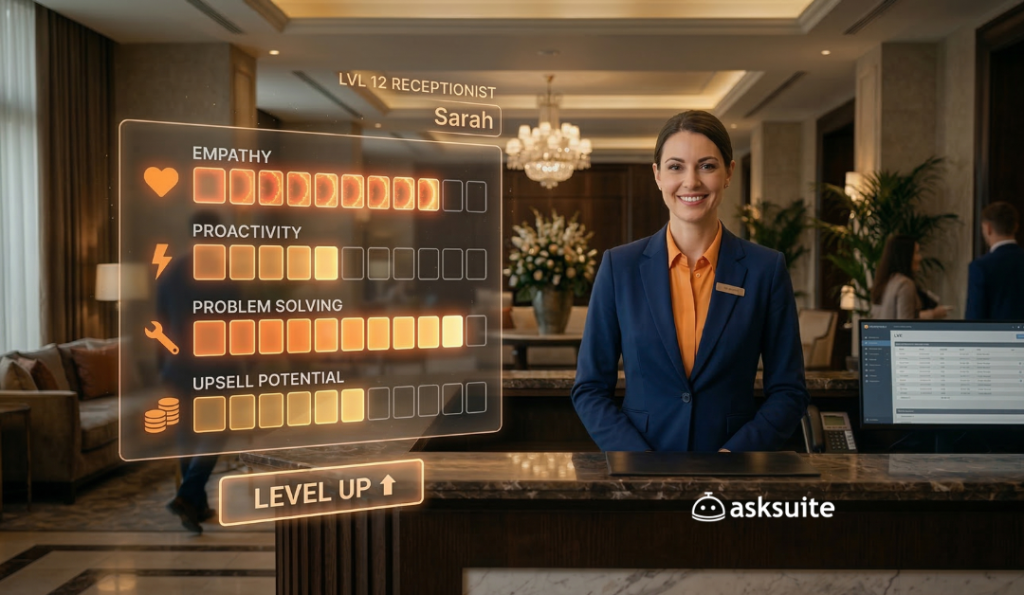
Transforming compliance and service standards into a game changes the psychological relationship between the employee and their development. By utilizing leaderboards, digital badges, and progress tracking, hotels can turn routine training into a high-engagement competition. This approach rewards excellence and provides management with a clear visual of who is leading the team in expertise.
Virtual reality (VR) simulations
Virtual Reality offers a zero-risk environment for mastering high-stakes scenarios. Whether the staff is practicing emergency evacuation protocols or navigating a confrontation with a difficult guest, VR allows for repeated practice without risking the hotel’s reputation or guest safety. This immersive experience builds “muscle memory” that traditional reading materials cannot replicate.
To illustrate the transition from outdated classroom models to the high-efficiency digital tools of 2026, the following table compares the two approaches. This side-by-side analysis highlights how shifting toward a tech-driven strategy can resolve common bottlenecks in scalability, engagement, and operational oversight.
Traditional training vs. modern tech-driven training
| Feature | Traditional training | Modern tech-driven training |
| Delivery | In-person, long-form sessions | On-demand, mobile Microlearning |
| Retention | Lower (Passive learning) | Higher (Active and Gamified) |
| Scalability | Difficult and resource-heavy | Instant deployment across multiple sites |
| Feedback | Delayed or annual reviews | Real-time via Performance Analytics |
10 tips for effective hotel staff training
Implementing a training program requires both high-end software coupled with a culture that values continuous improvement. Use these ten strategies to ensure your team remains agile and guest-focused:
1. Prioritize kinesthetic learning
Move beyond static manuals and slide decks. Adult learners in the hospitality sector retain information best through “doing.” Whether it is practicing a room inspection or mastering a new espresso machine, hands-on experience builds the muscle memory necessary for high-pressure shifts.
2. Role-play high-stress scenarios
Theory often fails during a crisis. Regularly conduct role-playing exercises for difficult situations, such as a “lost reservation” for a VIP or an overbooked night during peak season. This allows staff to practice the HEART model in a safe environment before they face real guests.
3. Establish continuous feedback loops
Training is a two-way street. Implement monthly “check-ins” where staff can identify areas where they feel under-equipped. When employees have a voice in their own development, they are more likely to engage with the material and take pride in their mastery.
4. Leverage cross-departmental training
A waiter who understands the check-in process at the front desk is a versatile asset during a “labor crunch.” Cross-training reduces departmental silos and fosters empathy between teams, leading to a more cohesive guest experience.
5. Empower “culture champions”
Every hotel has veteran employees who embody the brand’s values. Identify these “Culture Champions” and involve them in the mentoring process. Peer-to-peer learning is often more effective than top-down instruction because it carries the weight of real-world experience.
6. Utilize high-quality video demonstrations
Visual aids are essential for maintaining technical standards. Brief, high-definition videos showing “The [Hotel Name] Way” to set a table or sanitize a high-touch area reduce ambiguity and provide a visual benchmark that a text-based manual cannot match.
7. Incentivize professional milestones
Motivation is a key driver of retention. Tie training milestones, such as completing a “Wine Excellence” module or a “Conflict Resolution” series, to small bonuses, extra PTO, or public recognition. This creates a culture where learning is seen as a reward rather than a chore.
8. Integrate diversity and inclusion (D&I)
In 2026, global travel is more accessible than ever. Training must include modules on cultural awareness and equitable service. Ensuring your team can navigate different customs and expectations with grace is a hallmark of modern, world-class hospitality.
9. Standardize the “signature” basics
While flexibility is important, the core basics of your brand must be unmistakable. From the way a phone is answered to the specific scent in the lobby, standardize these “signature” moments. Consistency builds the trust that leads to repeat bookings.
10. Audit and align your tech stack
Your training software should not exist in a vacuum. Ensure your Learning Management System (LMS) integrates seamlessly with your Property Management System (PMS) and HRIS. This integration allows you to see the direct correlation between training completion and operational KPIs like check-in speed or upsell revenue.
Measuring the ROI and effectiveness of your programs
In a data-driven hospitality environment, the mantra remains: what gets measured gets managed. Proving the return on investment (ROI) for staff development requires a shift from tracking “completion rates” to tracking “performance outcomes.” To validate your training budget, aim for these four critical indicators.
1. Long-term employee retention rates
The most immediate financial benefit of a robust training program is a measurable decrease in staff churn. In 2026, the cost of replacing a single mid-level manager can equal several months of their salary in lost productivity and recruitment fees. By tracking “Stay Interviews” and turnover dates, you can visualize how career development paths act as a tether, keeping your top performers within your organization rather than losing them to competitors.
2. Guest experience correlation (NPS/CSAT)
Raw data from Net Promoter Scores (NPS) and Customer Satisfaction (CSAT) surveys provides a direct window into the effectiveness of your soft-skills training.
- The “spike” analysis: Map your training calendar against your review cycles. A successful rollout of the HEART model should correlate with a reduction in “service speed” or “staff attitude” complaints on platforms like TripAdvisor or Google.
- Sentiment analysis: Use modern reputation management tools to track specific keywords (e.g., “helpful,” “proactive,” “seamless”) that appear in reviews following a departmental training blitz.
3. Sales growth and revenue architecture
Training should yield a visible upward trend in your RevPOR (Revenue Per Occupied Room).
- Upsell conversion: Monitor the performance of your front desk team before and after an “Art of the Upsell” module. Even a 5% increase in room-type upgrades or late-checkout fees can result in six-figure annual revenue gains for larger properties.
- F&B contribution: Track the average check size in your restaurants. Effective suggestive-selling training for servers typically results in higher beverage and dessert sales, moving the needle on your total F&B margin.
4. Operational precision and error reduction
The “Technical Core” of your training is best measured by what doesn’t happen. High-quality training reduces the friction that erodes profit margins.
- Billing integrity: Track the frequency of billing disputes and manual folio corrections. A reduction in these errors indicates that your staff has achieved PMS mastery.
- Maintenance and safety: Monitor the time between an issue being reported and its resolution. Effective training in “Preventive Hospitality” empowers staff to spot and report maintenance needs before they impact a guest’s stay, reducing the need for expensive “recovery comps.”
FAQs about hotel staff training
Q: How can I train staff effectively with a limited budget?
Training does not require a massive capital outlay to be effective. Focus on peer-to-peer mentoring, where your most experienced “Culture Champions” shadow new hires. Additionally, leverage manufacturer-led training; most PMS providers and kitchen equipment manufacturers offer free webinars and certifications. By prioritizing high-impact microlearning delivered via existing mobile devices, you eliminate travel costs and expensive off-site seminars.
Q: How often should refresher courses occur?
The frequency of training depends on the volatility of the skill.
- Annual: Critical skills such as safety protocols, fire drills, and legal compliance.
- Quarterly: Service standards and technology updates. Frequent “re-syncs” prevent habitual drift, where staff slowly deviate from SOPs over several months of high-volume operations.
- Monthly: Focus on “surprise and delight” techniques or seasonal menu changes to keep the team engaged.
Q: What are the most critical soft skills for 2026?
While technical skills get guests through the door, soft skills keep them coming back. The foundations of modern hospitality are:
- Active Listening: The ability to hear what a guest isn’t saying.
- Emotional Intelligence (EQ): Recognizing a guest’s emotional state and adjusting service speed and tone accordingly.
Adaptability: The capacity to maintain grace and efficiency when technology fails or travel disruptions occur.
The difference between a “good” hotel and a “world-class” property lies in the preparation of its people. Now that you have the framework for a high-performance team, it is time to apply these strategies to your most personal guest touchpoints.
[Read our latest blog: Mastering Hotel Room Service]
Explore how to blend tech-driven ordering with the “human touch” to turn in-room dining into a signature brand experience and a major revenue driver.