
Discover 5 actionable steps hotels can take to apply AI, from potential guest communication to predictive maintenance, bringing efficiency without replacing the human touch
In hospitality, AI has already moved from theory to action: according to industry research, 73% of hoteliers believe AI will be transformational for the sector, and 61% say it’s already impacting their operations or will be soon (Alliants, 2025).
If you’re a hotel decision-maker wondering, “Where do I start with AI?”, you’re not alone. Most understand that technology matters, but practical guidance is often missing.
That’s exactly what this article delivers. We’ll explore 5 concrete, practical methods your hotel can start using to employ AI right now. Whether you’re looking to automate guest interactions, optimize pricing, or reduce maintenance surprises, each strategy is designed to stand alone or scale together.
Most importantly, AI in hospitality does not replace people. Instead, it frees up your team from repetitive tasks, allowing them to concentrate on what truly matters: delivering exceptional and personalized service.
Let’s look closer.
5 ways to use AI in hospitality
The following AI applications are already driving results in hotels around the world. Each one is proven, practical, and can be implemented gradually, either as a standalone solution or as part of a broader digital transformation. Start small or scale big: the choice is yours.
1. AI-powered communication with travelers
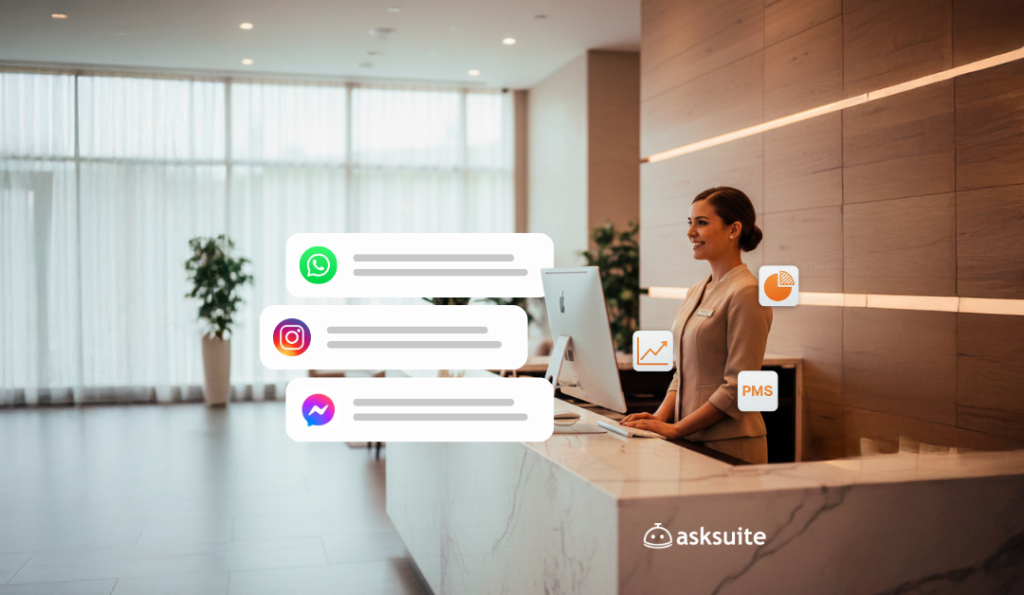
Hotels today face a clear communication bottleneck: travelers send messages across websites, WhatsApp, Instagram, and email, often with the same questions about check-in times, amenities, or bookings. But hotel teams can’t be available 24/7, let alone respond instantly in multiple languages. That’s where many potential bookings are lost.
The solution? An AI Reservation Assistant that handles FAQs, provides multilingual support, and manages direct bookings around the clock when integrated with the booking engine.
What this changes for your hotel:
- Automates 80–90% of routine inquiries
- Enables 24/7 potential traveler support in multiple languages
- Increases direct booking revenue with real-time responses and upsell triggers
How to start:
- Launch an AI Reservation Assistant on your website as a first touchpoint
- Ensure multilingual functionality to reach international travelers
- Integrate with your hotel’s booking engine for travelers ready to book
- Set escalation protocols so complex cases go to your team
Did you know? Asksuite is an all-in-one AI & communication platform that connects hotels and travelers. Its next-gen AI, Sophia, is built specifically for hospitality and it’s more than just an assistant, it’s your hotel’s new digital mind.
Hotels using Sophia rely on:
- AI Reservation Assistant that provides 24/7 service with context understanding and smart learning, delivering a personalized experience.
- AI Agent Copilot that empowers your reservation team with intelligent tools that streamline tasks with just a click.
- AI Data Hub that centralizes your hotel’s knowledge to optimize AI performance and continuous learning.
2. Dynamic revenue management and pricing optimization
In a market where pricing can shift daily, or even hourly, depending on demand, events, weather, and competitor activity, relying on manual rate adjustments puts hotels at a disadvantage. Human agents, no matter how skilled, simply can’t keep up with the volume of data or the speed required to respond to market changes in real time.
That’s where AI-powered revenue management makes a critical difference. By continuously analyzing external and internal data like competitor pricing, booking trends, local events, and weather forecasts. AI can suggest or apply dynamic pricing updates instantaneously. This allows hotels to consistently offer competitive rates that maximize revenue and occupancy without sacrificing profitability.
Key benefits include:
- Maximizing RevPAR by adapting rates to up-to-the-minute demand
- Reducing dependence on OTAs by enhancing the value of direct bookings
- Improving forecast accuracy for revenue and staffing decisions
Start with a full audit of your current pricing strategy to identify gaps. Then, pilot dynamic pricing on a few room types or dates with fluctuating demand. Use guardrails to define pricing boundaries, ensuring rates stay aligned with brand standards and potential guest expectations.
AI-driven pricing is a tool for accuracy and agility. By leveraging real-time data, hotels can respond to market shifts with confidence, adjusting rates intelligently to stay competitive, improve revenue performance, and plan more effectively for future demand.
3. Personalized potential guest experience via data analysis
Travelers expect more than a clean room and courteous service, they want experiences tailored to their preferences, behavior, and past interactions. Generic service no longer meets travelers’ expectations as they’re used to customization in nearly every aspect of their digital lives, from shopping to streaming.
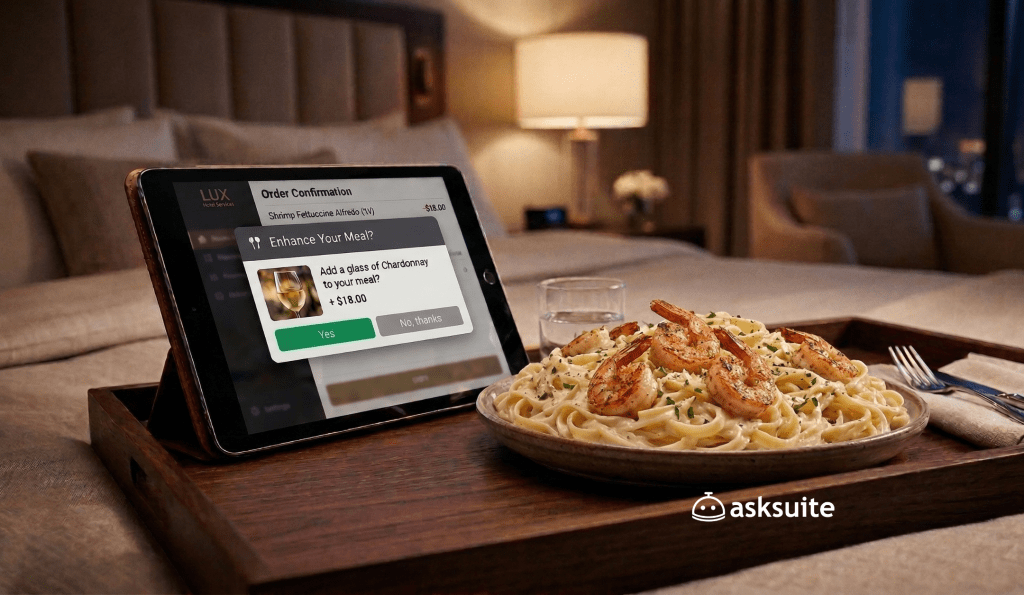
AI makes hyper-personalization in hospitality not only possible but scalable. By analyzing data from previous stays, booking history, preferences, and even engagement with marketing channels, AI can individualize every touchpoint of the guest journey.
This could mean offering a specific room type based on past choices, setting preferred room temperature or lighting in advance, or sending targeted offers and messages before and after the stay.
What personalized service powered by AI looks like:
- Pre-arrival offers based on past behavior and travel purpose
- Custom room configurations and in-stay suggestions
- Post-stay communications with relevant upgrades, discounts, or loyalty rewards.
Centralize your traveler data using CRM or PMS integrations, ensuring compliance with privacy regulations like GDPR. Then, begin with simple custom emails and gradually implement behavioral triggers based on potential guest actions.
This shift toward curated experiences doesn’t require a massive transformation overnight. With the right data foundation and a phased approach, hotels can create moments that surprise and delight, boosting guest satisfaction, conversion rates, and long-term loyalty.
4. AI-optimized content creation and SEO strategy
For hotels operating in multiple markets and languages, keeping content fresh, accurate, and SEO-optimized across platforms can be overwhelming. From room descriptions and blog posts to OTA listings and multilingual FAQs, the volume and complexity of content demands more time and resources than most teams can spare.
That’s where AI-driven content creation becomes a game-changer. Modern AI tools can generate clear, brand-aligned drafts for a wide range of formats, then optimize them for keywords, local context, and even tone of voice. They also help maintain consistency across platforms like your website, Google, Booking.com, and social media, while dramatically reducing turnaround time.
AI supports hotel content strategy by enabling:
- Multilingual room descriptions tailored to different booking channels
- SEO-friendly blog posts that drive organic traffic
- Consistent answers to FAQs across direct and third-party platforms
- Real-time content updates based on promotions, events, or seasonality
Start by auditing your current content to identify outdated or missing assets, especially on OTAs and high-traffic pages. Use AI tools to generate first drafts that align with your SEO goals and brand tone, then refine with human review. Implement structured data (schema markup) to improve search engine visibility.
Beyond efficiency, this approach allows hotels to speak more effectively to different guest segments and regions. With AI, your content team becomes faster and more strategic, spending less time on repetitive copywriting and more time driving visibility and bookings.
5. Predictive maintenance and resource management
Maintenance issues rarely happen at a convenient time and when they do occur, they can disrupt the potential guest experience, increase costs, and strain your team. Traditional break-fix models are often reactive: a guest reports a problem, and the hotel scrambles to fix it. But by then, the damage is done.
AI introduces a smarter, more proactive model. By analyzing data from IoT sensors and historical patterns, AI can detect anomalies in systems like HVAC or elevators, predicting failures before they happen. It can also optimize resource-heavy processes like housekeeping schedules, energy usage in unoccupied rooms, and supply chain planning based on actual demand trends.
AI-driven operations make it possible to:
- Monitor critical equipment and prevent unexpected breakdowns
- Automate energy savings by adjusting systems in real time
- Predict inventory and staffing needs based on occupancy patterns
Start by identifying high-impact areas like energy consumption or maintenance hotspots. Implement IoT sensors in key equipment and adopt AI systems that track usage and performance data. From there, monitor results and adjust based on ROI and operational impact.
This data-driven strategy helps transform hotel operations by improving efficiency and sustainability. With predictive maintenance and AI-led resource management, hotels can cut unnecessary expenses, prolong equipment lifespan, and streamline daily workflows, creating a better experience for both guests and staff.
Embracing AI without losing the human touch
Artificial intelligence enhances hospitality by supporting hotel teams in meaningful ways. When used thoughtfully, it streamlines repetitive tasks, boosts communication efficiency, and allows staff to focus more on delivering personalized, high-quality potential guest experiences. Instead of replacing human roles, AI adds value to them, making service smarter and more effective.
For hotels exploring where to begin, the best approach is to start small. Focus on one or two areas where your property feels the most pressure, be it traveler communication, pricing, or maintenance and apply AI tools that offer quick wins and measurable impact. With clear goals and gradual implementation, you can build internal confidence and unlock stronger results over time.
Looking ahead, AI is quickly becoming essential for competitive hotels, not just a nice-to-have. From direct booking growth to guest satisfaction and sustainability, the advantages are clear and accessible.
Want to see a practical example of where to start? Check out 5 traveler questions AI can answer (and how it frees up reservation agents) to explore how smart automation can improve potential guest communication from day one.