4.9/5
 HotelTechReport - with +970 verified reviews


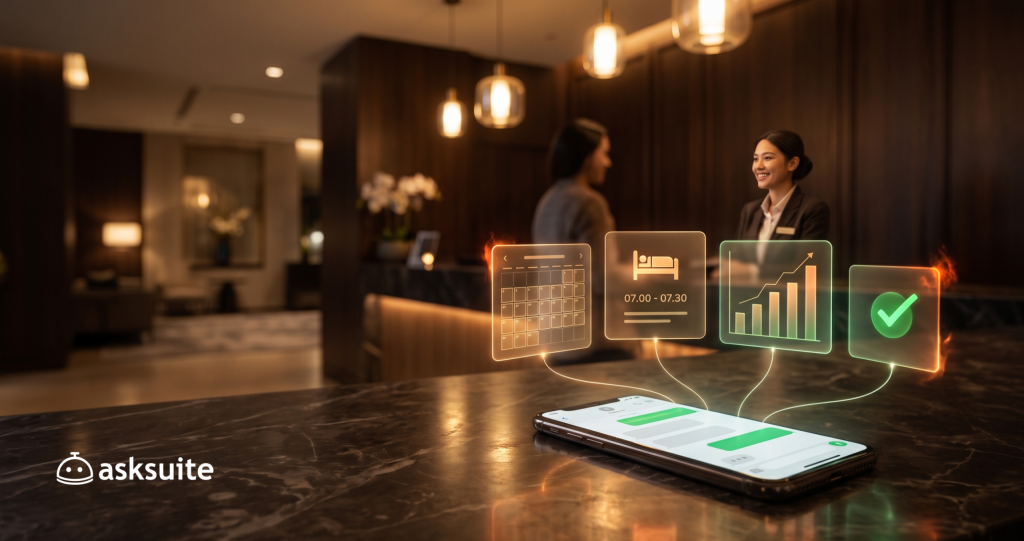
Knowing when to hire AI for your hotel depends less on trends and more on where your service team is already losing direct bookings. Quotes answered hours later, overnight messages waiting until morning and proposals that never get a follow-up show that travelers are reaching you, but the conversation is not turning into a booking.
This article covers one specific use: AI that supports your team in serving travelers and takes more conversations through to a direct booking. You will see what changes when AI joins your service team, which signs show the time has come, what waiting costs and what your hotel needs before hiring.
What changes when AI supports guest service and direct bookings
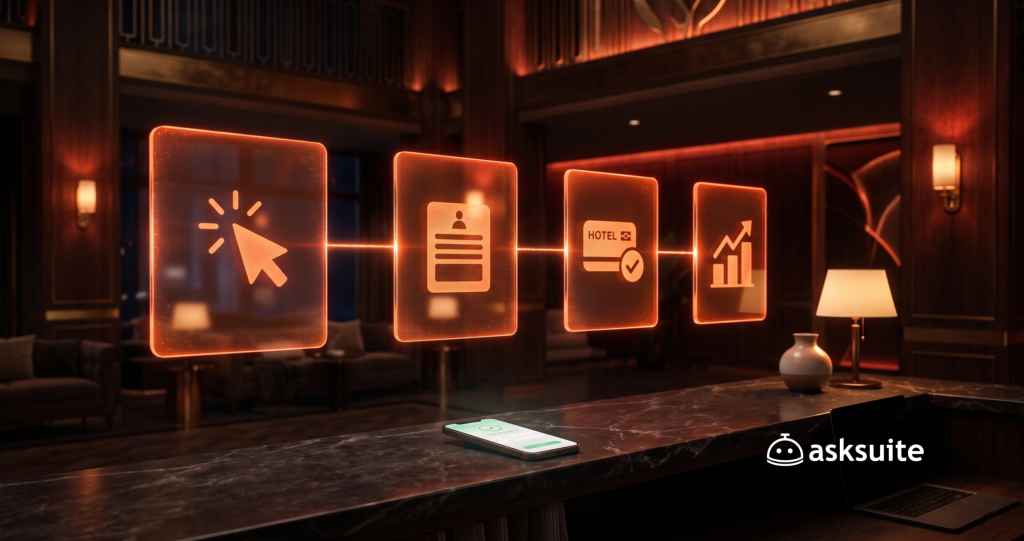
AI for hotels means an assistant that talks to travelers before they book. Beyond answering questions and FAQs, AI quotes, completes bookings through the hotel’s booking engine and qualifies leads.
In practice, AI plays two roles in guest service. The first is answering and gathering context. The second is selling: quoting, booking and following up inside the conversation. If you want to dig deeper, read about turning guest service into a sales channel in hospitality.
This is a commercial decision, not a technology one. According to the Mews Hotelier Survey 2026, 98% of hoteliers used AI in the last six months, but 59% still want the front desk and check-in handled by people. That shows where AI makes the most sense: in pre-booking service, where direct channel demand is lost for lack of a reply.
- 24/7 service in multiple languages. AI replies when your team is offline, so travelers do not have to wait for the next shift to get a quote.
- Quotes and bookings inside the conversation. AI checks rates and availability and takes the traveler to the hotel’s booking engine without switching channels.
- Qualification with handoff to your team. AI identifies intent, context and urgency and passes cases that need negotiation or special attention to your team.
- Omnichannel centralization. AI brings WhatsApp, your website, Instagram and other channels into one flow, without losing history or duplicating tasks.
- Metrics by channel, team and campaign. You see where leads come in, where replies stall and which conversations became direct bookings.
AI does not replace your reservations team. It takes over repetitive work and keeps service running after hours. That frees your team to negotiate and handle cases that call for human judgment.
Signs it is time to hire AI for guest service
It is time when your hotel replies late, struggles after hours, quotes manually and does not follow up. It is also time when you depend on OTAs and do not measure how many conversations become direct bookings. The more of these signs show up together, the more expensive waiting becomes.
These signs usually cluster around five areas: service speed and availability, turning conversations into bookings, team efficiency, control and data, and the strength of your direct channel.
A hotel that is slow to reply rarely has only that problem. It also tends to suffer from online booking abandonment and a backlog of unanswered conversations. That is why it is worth reviewing how you serve guests on WhatsApp.
Why waiting can cost you direct bookings
Putting off the decision usually costs more than it seems, because the cost does not show up as a software expense. It shows up as bookings that never happen. The hotel misses after-hours demand and the traveler books somewhere else. Meanwhile, your team keeps spending time on tasks that do not generate sales.
If you want to measure this more precisely, review your hotel website’s conversion rate.
Speed matters, but complete replies and follow-up matter even more. In a study of 2 million emails from 48 hotels published by Hospitality Net, only 1 in 8 replies included what the traveler needed to book. On top of that, only 2% of unanswered proposals got a follow-up.
This shows that replying fast is not enough. You need to reply well and follow up with method.
Pressure on the direct channel also helps explain the timing. Among independent hotels, the OTA share rose from 61.3% in 2024 to 63.4% in 2025, according to Cloudbeds data via PhocusWire.
At the same time, the hotel website had the highest average booking value, USD 516, in a SiteMinder report via PhocusWire. Every unanswered conversation on your direct channel is a booking that can move to an OTA. Waiting until next quarter could mean a whole season without serving that demand.
What your hotel needs before hiring AI
Before hiring AI for guest service, your hotel needs to validate volume, bottlenecks and processes. Without that, the technology becomes just another underused tool. The Mews Hotelier Survey 2026 also shows that 41% of hoteliers still have no formal AI policy, which helps explain why many initiatives stall at governance.
| Prerequisite | What to validate | Risk if missing |
| Your own website and booking engine | AI needs reliable data to quote and book | The conversation breaks before the direct booking |
| Conversation and request volume | There is enough demand per channel and per shift | The tool is underused |
| Documented policies, rates and rules | AI needs an SLA, tone and service rules | Inconsistent replies |
| Integration with PMS, booking engine, CRM and channels | Service needs synced data, whether with Opera, Cloudbeds or another PMS | Manual handoffs increase |
| Goals and metrics defined before buying | You need to track response time, quotes, follow-up and direct bookings | Proving value becomes hard |
| A team ready to receive qualified leads | Your team needs to own exceptions and negotiation | The lead goes cold in the handoff |
If these items are not clear yet, you do not need to buy now. The best next step is to organize your processes and KPIs for hotel sales and bookings. Then you can place AI at the right point in your guest service.
How to know if AI should be a priority now
AI should be a priority when you can show, with numbers from your own operation, that your service team is already leaving direct bookings unanswered. This assessment takes a few days and takes the decision out of gut feeling.
Start with four questions:
- Volume: how many conversations and quote requests come in each month, and through which channel?
- Time: what is your average response time, and how much demand arrives after hours?
- Follow-up: how many quotes get no reply after the first contact?
- Distribution: how much of your bookings depends on OTAs today?
If the answers show a lot of after-hours demand, stalled quotes and a small direct channel share, delaying the decision has a real cost. These numbers also help you present the topic to partners or leadership. The focus is supporting your team and recovering direct bookings, not replacing people.
If you have not used our diagnostic tool yet to check whether your property needs AI for guest service, you can access it here.
How Sophia supports guest service and drives direct bookings
Sophia is Asksuite’s AI for bookings, built for hospitality. She serves travelers, quotes and books 24/7 inside the conversation, qualifies leads and passes what needs human attention to your team. Meanwhile, your team focuses on what matters. Sophia is much more than an FAQ chatbot: she works inside your hotel’s sales funnel.
Sophia was built for direct bookings and works with your integrated booking engine. Asksuite serves 5,500+ hotels, has 500+ integrations with booking engines, PMS, CRMs and channels and has been the #1 Hotel Chatbot on HotelTechReport for 7 years in a row. If you want to see how it works in practice, check out Sophia, AI for bookings.
Frequently asked questions about AI for hotel guest service
When does it make sense to hire AI for a hotel?
When your service team is already losing contacts due to delays, struggles after hours, repeats manual tasks and does not measure how many conversations become bookings. If you recognize several of these signs, AI stops being a trend and becomes support for your direct channel.
Does AI for hotels replace the reservations team?
No. AI takes over repetitive work, replies fast, quotes and qualifies demand. Your team remains responsible for negotiation, relationships and cases that need human attention.
How does AI help strengthen the direct channel?
It replies instantly, quotes inside the conversation and serves travelers after business hours. That way, your hotel serves its own demand before the traveler completes the booking somewhere else.
Can any hotel hire AI for bookings?
Not necessarily. The hotel needs its own website and booking engine, enough conversation volume to justify automation and basic service processes. Without these, the technology tends to be underused.
How do I justify hiring AI to leadership?
Show contact volume, response time, quotes without follow-up and OTA dependency. The strongest argument is the cost of the direct bookings you lose today, not innovation itself.
Does Sophia only serve travelers or does she also sell?
She serves and sells. Sophia replies, quotes and books 24/7 right in the conversation, qualifies leads and passes what needs human attention to your team.
Want to know if your hotel’s guest service already has the volume and bottlenecks to benefit from AI? Take the interactive diagnostic or book a demo and meet Sophia, AI for bookings.