4.9/5
4.9/5  HotelTechReport - with +970 verified reviews

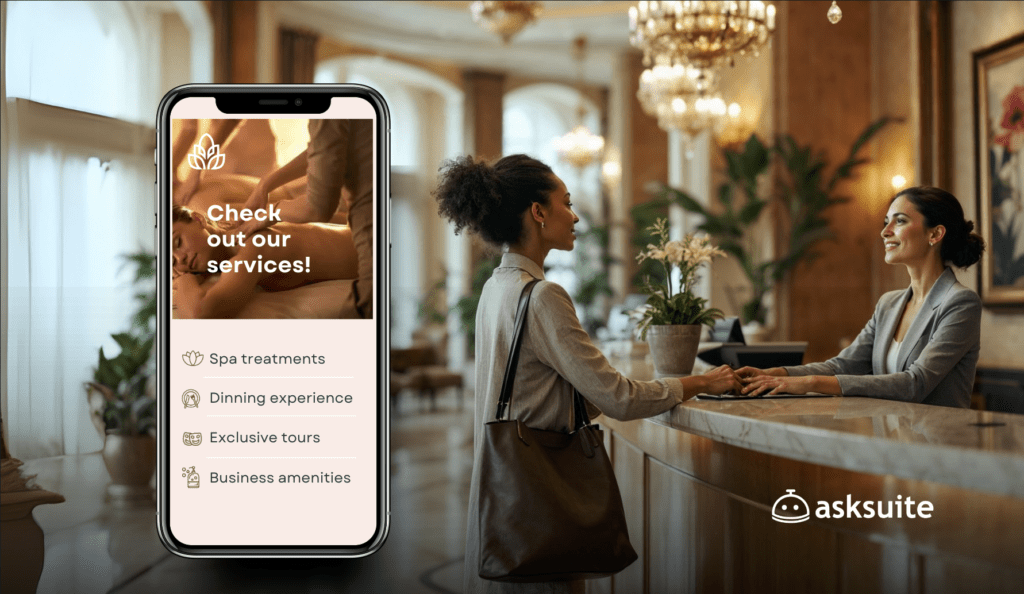
There are six core types of service in the hotel industry that consistently attract guests and drive revenue: personalized experiences, business amenities, wellness services, concierge assistance, unique dining, and convenient transportation.
But delivering these services well requires more than good intentions. It demands a structured approach, from the first touchpoint before booking all the way through post-stay follow-up.
In this guide, you’ll learn what high-quality hotel service looks like in practice, the measurable benefits it generates, and which service types are gaining the most traction among modern travelers.
What is service in the hotel industry?
Service in the hotel industry covers the entire guest journey, from the initial price inquiry to post-checkout follow-up. It is not limited to front desk interactions or room quality. A complete hotel service experience includes:
- Pre-reservation: response speed, rate transparency, and first impressions across digital channels.
- Pre-stay: check-in communication, preference gathering, and personalized welcome.
- During stay: responsiveness, upsell opportunities, and frictionless in-property experience.
- Post-stay: loyalty outreach, review requests, and direct rebooking incentives.
According to a 2024 J.D. Power North America Hotel Guest Satisfaction Study, communication quality before and during the stay is among the top drivers of overall guest satisfaction scores. In short: hotel service is not a department, it’s a strategy.
What are the benefits of excellent service in hotels?
Investing in service quality directly impacts a hotel’s bottom line. Here are four concrete advantages:
1. Higher guest satisfaction and loyalty
Guests who feel genuinely cared for are significantly more likely to return and recommend the property.
According to research from Cornell’s Center for Hospitality Research, a one-point increase in a hotel’s online review score (on a 5-point scale) allows the property to increase its price by up to 11.2% without losing occupancy.
Delivering 24/7, consistent communication, especially via AI-powered tools, ensures guests receive support at any hour, which directly improves satisfaction scores and reduces service gaps.
2. More direct bookings
A common principle in hospitality is: the first booking may come through an OTA, but the second one should come direct.
Guests who have a memorable service experience are more inclined to return through the hotel’s own website, eliminating commission costs and strengthening the direct relationship.
Seamless pre-stay and post-stay communication, powered by automation, plays a central role in converting repeat visitors into direct bookers.
3. Upselling and cross-selling revenue
Guests cannot buy what they don’t know exists. Proactive, well-timed messaging about spa treatments, room upgrades, or dining experiences significantly increases ancillary revenue.
Tools like automated messaging workflows allow hotels to promote amenities at exactly the right moment in the guest journey, without burdening the front desk team.
4. Competitive differentiation
With thousands of accommodation options available on any given travel search, service is often the decisive differentiator.
Hotels that deliver distinctive, personalized service experiences stand out on review platforms and generate organic word-of-mouth — both online and offline.
6 types of hotel service that attract guests
Below are the six service categories that modern hoteliers should prioritize to meet and exceed guest expectations.
1. Personalized experiences
Personalization is the most impactful type of hotel service for building long-term guest loyalty. This includes pre-booking customization (such as room type preferences or dietary restrictions noted at reservation), personalized in-room amenities upon arrival, and tailored communication throughout the stay.
Even small gestures, like a welcome note using the guest’s name, or a complimentary item aligned with their preference, create disproportionately strong impressions.
According to a McKinsey report on personalization in the hospitality sector, 71% of consumers expect personalized interactions, and 76% get frustrated when this doesn’t happen. For hotels, this is both an opportunity and a risk.
2. Business and remote work amenities
Hotels that cater to remote workers and business travelers unlock a growing and loyal traveler segment.
High-speed, reliable Wi-Fi is now a baseline expectation, not a differentiator. What sets hotels apart is the broader work environment: dedicated co-working spaces, ergonomic desk setups, noise-isolated meeting rooms, and readily available tech support.
The rise of the “bleisure” traveler (combining business and leisure) has expanded this segment beyond traditional corporate guests. Offering flexible room configurations and extended-stay rates helps hotels capture longer bookings from this audience.
3. Wellness and recreational services
Wellness amenities are among the fastest-growing demand drivers in the hotel industry. Travelers increasingly choose hotels based on fitness and wellness offerings.
Properties with on-site gyms, spa services, yoga classes, healthy menu options, or outdoor activity access consistently outperform competitors in satisfaction scores among health-conscious guests.
The Global Wellness Institute estimated the wellness tourism market at $651 billion in 2022, with continued growth projected through 2027. Hotels that invest in this category early capture a high-value, repeat-visit demographic.
4. Concierge and local assistance
A great concierge turns a good stay into an unforgettable one. Beyond booking restaurant tables, today’s concierge service provides curated local recommendations, arranges exclusive experiences, and coordinates transportation — all reflecting in-depth knowledge of the destination.
This service type is particularly valuable for international travelers who are unfamiliar with the local area and appreciate knowledgeable, proactive guidance.
Hotels that integrate concierge capabilities into their digital communication channels (WhatsApp, webchat, messaging apps) can deliver this experience 24/7.
5. Unique dining experiences
Distinctive dining is a powerful driver of social proof and direct revenue. Rooftop restaurants with city views, farm-to-table menus featuring local producers, and immersive dining events give guests compelling content to share on social media, organically extending the hotel’s visibility and brand reach.
Hotels that treat their F&B offerings as a strategic differentiator, not just a convenience amenity, often see measurable increases in both in-house revenue and external traffic driven by food-focused content.
6. Convenient transportation options
Transportation services reduce guest friction and increase satisfaction, especially for international visitors.
Airport transfers, curated partnerships with local car rental companies, shuttle services to key attractions, and bicycle lending programs are all examples of transportation amenities that add tangible value.
For destination hotels or properties in less central locations, transportation services can be a critical deciding factor in booking. Highlighting these options clearly in pre-stay communications also reduces day-of logistics questions for the front desk.
Conclusion
Delivering excellent service across these six categories is no longer optional for hotels competing in today’s market.
Guests expect a complete experience — and they share both the highs and the lows publicly. The business case is clear: higher satisfaction scores, more direct bookings, greater ancillary revenue, and stronger word-of-mouth all trace back to the quality of your hotel’s service at every stage of the guest journey.
The hotels winning in this environment are those that combine genuine hospitality with smart technology — ensuring no guest touchpoint is missed, even with lean teams.

Frequently Asked Questions about the service in the hotel industry
What is considered good service in a hotel?
Good hotel service entails responding to guest needs promptly, maintaining proactive communication at every stage of the journey (pre-booking, check-in, during the stay, and post-checkout), personalizing the experience based on guest preferences, and resolving issues efficiently. The industry benchmark is not just meeting expectations, but consistently exceeding them in memorable ways.
What are the most important types of service in the hotel industry?
The six most critical types are personalized guest experiences, business and remote work amenities, wellness and recreational services, concierge and local assistance, unique dining experiences, and convenient transportation options. Each type addresses a distinct guest need and contributes to overall satisfaction and loyalty.
How does hotel service quality affect revenue?
Service quality directly impacts revenue by increasing the likelihood of direct rebookings—thereby avoiding OTA commissions—improving online review scores that support rate optimization, and creating upselling opportunities for ancillary services. Research suggests that even modest improvements in review scores can justify meaningful rate increases without loss of occupancy.
How can hotels improve guest service with limited staff?
AI-powered communication platforms allow hotels to maintain 24/7 responsiveness across channels like webchat, WhatsApp, and email without increasing headcount. Automation handles repetitive inquiries and routine pre-stay communications, freeing staff to focus on high-value, in-person service moments.
What is the difference between hotel service and guest experience?
Hotel service refers to specific interactions and offerings, such as check-in, concierge, and food and beverage services. Guest experience is the cumulative emotional impression created by all those interactions combined. While service is the foundation, experience also encompasses elements like ambiance, design, and brand perception.
How does personalization improve hotel service?
Personalization ensures guests feel recognized as individuals rather than just booking numbers. When hotels remember preferences from previous stays, tailor in-room amenities, or send timely and relevant communications, they build emotional loyalty that translates into repeat visits and positive reviews.
This blog post was originally written on December 2, 2021 by Claudia Jeffrey and updated on March 12, 2026 by Asksuite Team.