4.9/5
 HotelTechReport - with +970 verified reviews


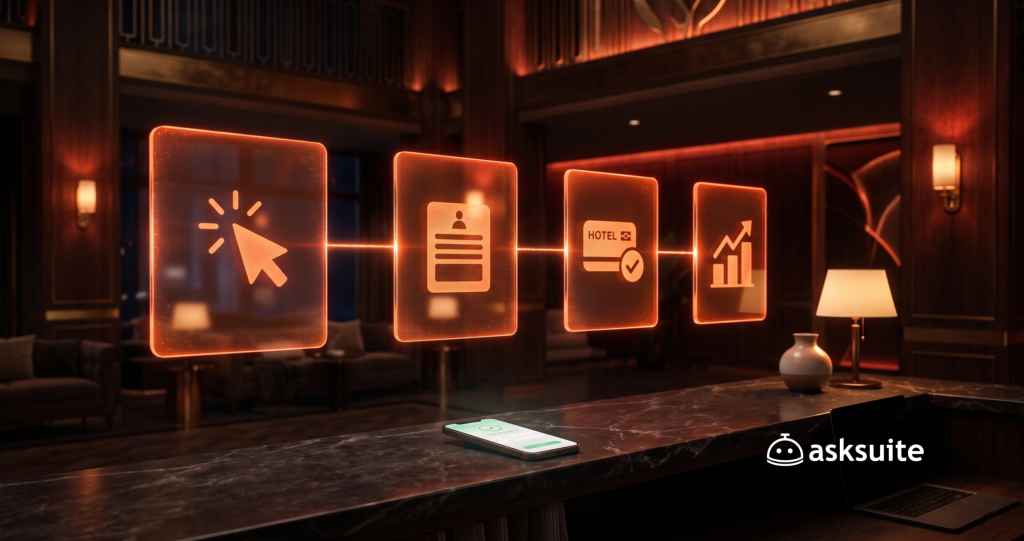
If your hotel optimizes campaigns for clicks, leads, or forms, the platforms learn to look for exactly that. Not necessarily a confirmed booking.
This is one of the most overlooked points in hotel ad optimization. Meta Ads and Google Ads are very good at finding people similar to those who have already converted. The problem is that they only know what “convert” means based on what you tell them.
In this article, you will understand how these platforms learn, why the conversion signal changes optimization quality, and what you can do to teach media to look for revenue, not volume.
How Meta and Google learn from conversion signals
Meta and Google learn from the event you define as a conversion. If the signal is a click, the platform looks for people who click. If it is a lead, it looks for people who fill out a form. If it is a confirmed booking, it starts looking for travelers more likely to book. The algorithm does not understand intent, it understands signal.
A conversion event is the action you choose as success within the campaign. It can be a click on the book button, a form submission, a conversation started on WhatsApp, or a completed booking.
From this event, automatic optimization works more or less like this:
- The platform shows ads to different people profiles.
- Some of them complete the event you defined as a conversion.
- The platform identifies patterns in these people: interests, behavior, time, device, location.
- The bidding strategy starts investing more in similar profiles and less in those that do not convert.
- The cycle repeats, and the algorithm becomes increasingly efficient at generating that event.
This feedback the platform receives works as a feedback signal. It tells the algorithm whether it is on the right track. And the algorithm will repeat what works according to that signal, without questioning whether it makes sense for your business.
That is why choosing the conversion event is not a technical detail. It is the most important instruction you give the platform. And not every signal teaches the same thing.
Click, lead, booking, and revenue do not teach the same thing
Click, lead, booking, and revenue are different signals for the algorithm. Click measures initial interest. Lead measures stated intent. Booking measures decision. Revenue measures real economic outcome.
The closer the signal is to revenue, the more optimization tends to reflect the hotel’s business objective.
| Signal | What it measures | What the platform learns to look for |
| Click | Initial interest | People who click easily |
| Lead | Willingness to leave contact information | People who fill out forms |
| Booking | Purchase decision | Travelers with real intent to book |
| Revenue | Economic value of the booking | Travelers who generate more value for the hotel |
- Click teaches volume. It shows curiosity, not intent. A campaign optimized for clicks may have a high CTR (click-through rate) and still bring in very few people ready to book.
- Lead teaches willingness to leave contact information. It is one step beyond the click, but it is still not a booking. When the lead is the main event, the platform learns to find people who fill out forms easily. CPL (cost per lead) drops, volume increases, and the reservations team receives many unqualified contacts.
- Booking teaches real purchase intent. Here the platform begins to understand who actually decides. The most relevant metric becomes CPA (cost per acquisition), that is, how much each booking generated costs.
- Revenue teaches value. Two bookings are not worth the same. A seven-night stay in high season is different from one night on a weekday. When the platform receives the conversion value, it can distinguish one from the other. That is where ROAS (return on ad spend) comes in, comparing the revenue generated with the amount invested.
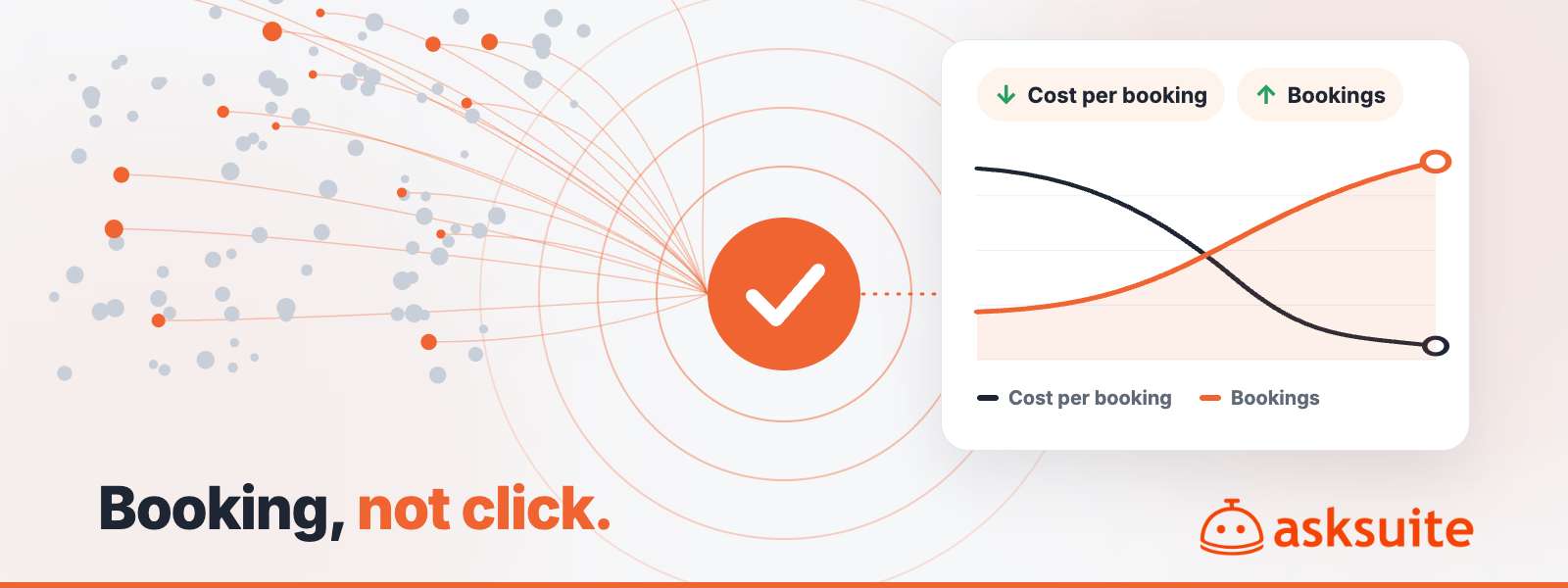
Meta positions the Conversions API precisely as a way to send events that are closer to the real outcome, including those that happen outside the website. It is a clear sign of the direction platforms are taking: the more real the data, the better the basis for optimization.
Why hospitality confuses the algorithm more than other sectors
In hospitality, the conversion signal suffers from noise that other sectors do not have. There is cancellation, no-show, a lead that never turns into a booking, a booking that starts in chat or WhatsApp, and a long gap between the click and the stay. That is why measuring only clicks or forms can teach the algorithm the wrong lesson.
Some factors make the traveler journey especially hard to read:
- Cancellation and no-show. A booking made today may be canceled tomorrow or simply never materialize. If the platform counts that booking as a success, it learns from an outcome that never actually happened.
- Advance booking window. The time between search and booking can be weeks or months. Today’s click may become a booking much later, and the connection between the two is easily lost.
- Bookings that start in conversation. Many travelers prefer to clear up questions on WhatsApp or in the hotel website chat before booking. These bookings often do not go through a form and remain invisible to the ad platform.
- Lead is not revenue. A contact asking for a quote is one step in the journey. If it does not become a booking, it should not teach the algorithm as if it were an outcome.
- Fragmented journey. The traveler sees an ad on Instagram, searches on Google, chats on WhatsApp, and books through the booking engine. It is an omnichannel journey that passes through several channels before the decision.
All of this affects attribution, which is the way of identifying which channel or ad contributed to each booking. When attribution is incomplete, the platform only sees part of the story. And it learns from that part.
What changes when the confirmed booking is sent back to the platform
When the confirmed booking is sent back to the platform, optimization no longer depends only on intermediate signals. The algorithm starts receiving feedback that is closer to the hotel’s real objective and can adjust audience, bid, and creative based on bookings, not just interactions.
Think about the full booking journey:
- The traveler clicks the ad.
- They browse the website or start a conversation on WhatsApp.
- They make the booking.
- The booking is confirmed in the PMS, the hotel management system.
- The stay happens and the revenue is realized.
In most campaigns, the platform only sees steps 1 and 2. Everything that happens after that is outside its reach.
This is where offline conversions come in. The name sounds intimidating, but the idea is simple: the result that happens outside the ad, such as a booking confirmed in the PMS, is sent back to the platform. Google Ads allows you to import conversions that happen outside the website, and enhanced conversions help connect these results to ads more accurately.
With this feedback, a few things change:
- The algorithm learns from who books, not only from who clicks or fills out a form.
- The value of the booking carries weight. With value-based bidding, the platform can prioritize more valuable bookings, not just more bookings.
- Bookings that start in conversation start counting, as long as WhatsApp and chat data are also sent.
- The signal becomes more reliable, because it reflects what actually happened at the hotel.
Learning improves when the signal is consistent. In other words, when the data arrives every time, in the right format, and with the same logic. To do that, you need to connect the PMS, the website booking engine, and conversation channels to the ad platforms. That is the point where many hotels get stuck.
What to review in your campaigns today
Before increasing media investment, it is worth checking whether you are sending the platform a real value signal or just an indicator of interest. In many cases, the fix is not in the creative, but in the definition of the conversion event and the connection with the PMS.
Use this checklist as a starting point:
- What is the main conversion event today? Check which event is marked as the primary conversion in each campaign.
- Does this event represent a booking or just a lead? If it is a form or click, the platform is learning to look for that.
- Is the booking value sent? Without value, the platform treats a one-night stay and a long stay the same way.
- Do bookings via WhatsApp and chat count? If they do not, part of your best results remains invisible.
- Are cancellations and no-shows considered? Bookings that do not materialize should not teach the algorithm.
- Do the platform numbers match the PMS? A large difference indicates the signal is incomplete.
- Does the attribution window make sense for your average booking lead time? Windows that are too short may ignore bookings made earlier.
As Meta and Google depend more on automation, signal quality starts to matter more than click volume. For hotel marketing, this means replacing the logic of “more leads” with the logic of “better signal.”
In practice, sending booking and revenue back to the platforms usually requires integrations and an IT project.
Atlas, by Asksuite, sends confirmed bookings from the PMS and WhatsApp, with real value, to Meta and Google, so the algorithm can optimize for revenue, not clicks. No IT project required and available for hotels that use the WhatsApp Performance Suite. Discover Atlas
Frequently asked questions
What are conversion signals in Meta Ads?
They are the events the platform uses to learn what counts as a conversion. It can be a click, lead, purchase, or any other event configured by you. The closer this signal is to the real outcome, the more useful it tends to be for optimization.
Does Google Ads learn better from clicks or from confirmed bookings?
It learns better from the signal that is closest to the business objective. In hospitality, a confirmed booking is usually much more useful than a click because it represents real purchase intent, not just initial interest.
Why is a lead not always a good signal for hotels?
Because a lead measures only the submission of contact information, not a booking. A high volume of leads can hide unqualified contacts, without real intent or purchasing power, and this can lead the platform to look for the wrong profile.
What is offline conversion import?
It is the process of sending to the platform events that happened outside the initial click, such as a booking confirmed in the PMS or CRM. This helps the algorithm optimize based on real results, not just online interaction.
Should every hotel campaign optimize for revenue?
In general, the closer the signal is to revenue, the better for learning. But this depends on data quality, event volume, and the ability to integrate the PMS or booking engine reliably.
Do bookings that start on WhatsApp follow the same logic?
Yes, as long as the hotel can attribute that contact to the correct campaign and send the conversion back to the platform. If that does not happen, an important part of demand stays invisible to the algorithm.
What is the most common hospitality media mistake?
Optimizing for interest metrics, such as click or lead, and treating that as if it were a booking. This makes the platform learn the wrong signal and makes it harder to find demand with a higher chance of generating revenue.
As platforms rely more on automation, signal quality matters more than click volume. The logic changes from “more leads” to “better signal.” If you want to teach Meta and Google to learn from revenue, you need to send back confirmed bookings, value, and operational context.
This usually requires integration between the PMS, WhatsApp, the booking engine, and paid media. If you want to understand how to send real bookings and revenue back to your hotel’s paid media, learn about Asksuite’s AGIR module and see how automation can use real PMS data to improve campaign optimization. Learn more at Atlas and Asksuite.