4.9/5
4.9/5  HotelTechReport - with +970 verified reviews

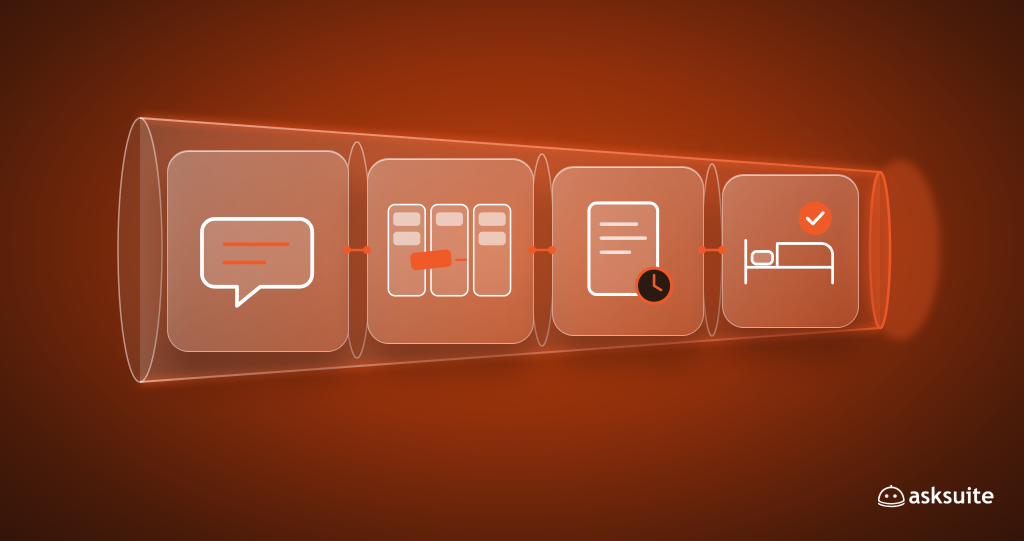
Set expiration dates for temporary content and search exact terms across your sources — more control, less manual work, and consistently up-to-date answers.
Artificial intelligence is already part of everyday hospitality operations. Hotels of every size can and should rely on AI agents that serve travelers 24/7, qualify opportunities, and bring scale to the operation, just like Asksuite’s Sophia.
What defines the next cycle is a natural evolution: it’s not enough to have an AI answering questions, you need governance over the information that feeds that AI. This is a clear trend across the tech industry. As intelligent agents become central to operations, the differentiator is no longer just automation, it’s the quality, transparency, and control of the knowledge base behind every answer.
This makes sense for any operation running on AI. A knowledge base is alive: it grows with every new rate, policy, seasonal package, event, or URL update. Part of that content is permanent — but some of it has an expiration date. A winter promotion, a holiday rate, a temporary notice. Managing that lifecycle, and knowing exactly where each piece of information lives, is what keeps responses relevant as the operation scales.
This is exactly where Sophia’s two new features come in. Designed as a content governance package, they give your hotel more control over what Sophia uses, when she uses it, and where that information is.
Why content governance matters
Every AI is only as good as the content base that feeds it. An automated answer earns trust when the information behind it is current, accurate, and traceable.
As the knowledge base matures and grows in volume, managing that content strategically becomes part of the work, as well as an opportunity. Hotels that treat the knowledge base as an asset, with a defined lifecycle and easy to audit, get more value out of AI: more consistent answers, less maintenance effort, and more confidence for the team.
The two updates below were designed to make this governance simple and self-service. They work together: one handles the timing of the content, the other manages location and correction.
1. Content Expiration Date: temporary content under control
You can now set an expiration date for any content added to Sophia’s knowledge base in the AI Studio.
When you create content — by text, document upload, or URL extraction — you’ll find an option in the form to set a future expiration date. The content works normally until then. Once the date is reached, it automatically stops being used by Sophia in responses.
One important detail: expired content is not deleted. It remains visible in the AI Studio for management and tracking — it simply stops being used by Sophia to generate answers. You keep the full history and visibility of your knowledge base, with the peace of mind that out-of-date information won’t reach travelers.
What this brings to your operation:
- Seasonal content under control: promotions, seasonal rates, events, and time-limited notices can be created with an expiration date already in place.
- Less maintenance effort: managing temporary content becomes lighter, without depending on periodic reviews to keep it updated.
- Consistently relevant answers: Sophia always works with current information, by design.
👉 Want to see how to set an expiration date step by step?Visit the Help Center.
2. Term Search Across Response Sources: find and update on the spot
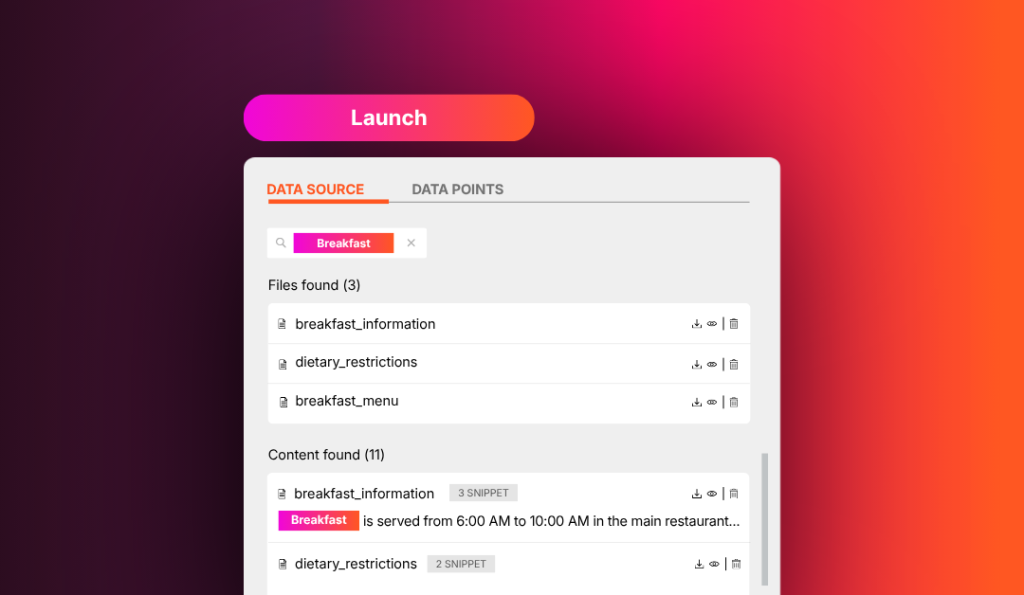
You could already identify which content source powered a Sophia response. Now you can go further: search for specific terms inside those sources.
In the AI Studio, you search for a term, the system identifies exactly where that content is, and you can update it immediately — in the same flow, with agility.
What this brings to your operation:
- More agile content management: locating specific information in the knowledge base becomes a direct search.
- More transparency: it’s even clearer where Sophia’s answers come from and how they are built.
- Faster troubleshooting: when you spot data that needs adjusting, you go straight to the exact source and update it on the spot.
👉 See how to use term search across your content sources in the Help Center.
More governance, more value from your AI
Together, these two improvements give your hotel something increasingly strategic: visibility and control over the lifecycle of the content that feeds Sophia.
You start understanding what’s active, what’s about to expire, and where each piece of information is located. The knowledge base gains a lifecycle, traceability, and governance — the pillars of consistent, mature knowledge management.
For the manager, the gain is direct: more confidence in automated answers and a lighter operation for the team. For the traveler, the result shows up in more current and consistent interactions, reinforcing trust in the hotel’s service.
How to access
Both features are now available for Asksuite clients using Sophia AI.
If you’re already a client, Content Expiration Date and Term Search Across Response Sources are ready to use in the AI Studio. If you have questions about setup or usage, visit the Help Center.
Not using Sophia AI yet? Content governance is just one part of what Asksuite’s AI can do for your operation. Talk to a specialist and discover everything Sophia has to offer.